


This post is all about becoming a voice over artist in a way that feels smart, realistic, and actually doable — not overwhelming or expensive.
If you’ve ever thought, “I have a decent voice… could this actually make me money from home?” you’re not alone. Voice over work is one of those side hustles that sounds dreamy but only pays off if you do it the right way.
Today, I’m breaking it down in plain English so you can decide if becoming a voice over artist is worth your time and how to start it without setting your cash on fire and blowing up your life! O.K., maybe not that dramatic, but you get my drift 😉
Also, while you’re exploring beginner-friendly ways to make money from home, you might also want to check out how to start a podcast for beginners — it’s another flexible, beginner-friendly option that doesn’t require special equipment or a “perfect” voice.
TL; DR – Becoming a Voice Over Artist
Let’s clear something up real quick.
You do not need:
- A “perfect” voice
- A fancy studio
- Expensive gear
- Industry connections
You do need:
- Basic training (yes, even if you think you sound great)
- Daily voice over practice, even when it feels awkward
- A quiet space to record (closets are elite, kitchens are not)
- Clean, professional-sounding audio
- Patience and realistic expectations
Do it the smart way:
You can land real voice over jobs from home and build steady, grown-woman income.
Do it the lazy way:
You’ll end up with an expensive microphone and zero bookings.
Trust me girlfriend, this isn’t about luck or talent. It’s about showing up, mastering your craft, and acting like the boss babe you’re trying to become.
How to Become a Voice Over Artist
Let me say this upfront because it will save you thousands of dollars.
Buying a microphone does not make you a voice over artist.
Training comes first and foremost. Always.
The voice over world is crowded, especially with beginners! The people who stand out aren’t the loudest or the fanciest. They’re the ones who sound natural, confident, and clean on audio.
Becoming a voice over artist is simply a skill. And skills get built, not downloaded.
When you’re brand new as a voice over artist, you’re not chasing movie trailers, cartoon characters, or video game leads.
That comes later….
Right now, you’re aiming for paid practice.
Work that pays real money, builds confidence, and doesn’t expect you to sound like a Hollywood pro on day one.
This is where beginners build momentum — and momentum builds money.
⬆️ SUPPORT MY CHANNEL – PIN THIS! 😊⬆️
Top 5 Voiceover Jobs for Beginners
These “Unsexy” Voice Over Artist Jobs Actually Make You Money
This is the stage most beginners try to skip.
And it’s also the stage that actually pays.
These beginner-friendly voice over artist jobs matter because they:
- Pay consistently
- Don’t require acting experience
- Can be recorded from home
- Often turn into repeat work
Most working voice over artists make their steady income right here.
Not in cartoons. Not in movies. Not in flashy trailer work.
This is the unsexy stuff that quietly covers bills.
And here’s where beginners mess up.
They skip this part because it doesn’t feel exciting.
They want the cool jobs first. The flashy ones. The brag-worthy ones.
But clients don’t care how excited you are.
They care if you:
- Sound clear
- Deliver on time
- Follow directions
- Don’t create drama
That’s how you build trust.
And trust is what moves you up.
Now let’s talk red flags.
If someone tells you:
- You’ll make thousands in your first month
- You don’t need training
- Your voice is “perfect as is”
- You just need better gear
That’s not a shortcut. That’s a money trap.
Real voice over artist income is built the same way every real business is built. Slowly. Skill by skill. With practice and patience.
And your beginner goal?
Not fame.
Not viral success.
Your goal is:
- Your first paid job
- Then your second
- Then your first repeat client
That’s the moment it stops being a “cute idea” and starts becoming real income.
And yes — it can absolutely happen from home.
If you’re curious about how much money working voice actors make, you can check out official voice actors salary data to see realistic income ranges. It won’t show overnight riches — but it will show you this is a real industry with real earning potential.
1. Short commercials
Local businesses aren’t looking for a movie-trailer voice or someone who sounds like a game show host. Nope! In fact, it’s just the opposite.
Theywant a voice that sounds normal, friendly, and trustworthy. The kind of voice you’d actually listen to.
Think radio ads, Facebook ads, and quick website videos. Clear. Calm. Confident. Not dramatic. Not extra.
Basically? If people have ever said to you, “Oh wow, I love your voice!” you’re already ahead of the competition! And that’s exactly why this is such a good entry point for a beginner voice over artist, like yourself.
2. Corporate training videos
These are the videos nobody wants to record… which is exactly why they hire a voice over artist to do it.
Think HR training, employee onboarding, safety instructions, and “how not to break company policy” videos.
The goal here is simple:
- Calm
- Clear
- Easy to understand
No acting. No drama. No fake excitement.
Honestly? If you can explain something without sounding bored or confusing, this is beginner gold.
These jobs pay, they repeat, and they don’t care if you’re brand new.
They care if you sound professional and easy to listen to.
And yes… a LOT of working voice over artists quietly make their money right here.
3. Explainer videos
These are short videos that break things down so regular people can understand them fast.
Hey someone’s gotta read those scripts. Why can’t that “someone” can be you?
Explainer videos are perfect for a beginner voice over artist because you don’t need a “special voice.” All they want is a real, friendly human who can explain things clearly without sounding stiff or robotic.
So, if people understand you when you talk, you’re already half way there!
These voice over jobs are everywhere, they’re recorded from home, and once a client likes you… they tend to come back again and again.
That’s how this turns into real money, not just a cool idea.
4. Online course narration
Course creators do not want to sit there and record 40 lessons themselves.
They want someone else to handle it.
What they’re looking for is simple:
- A clean, steady voice
- Easy to listen to
- Not distracting
No acting. No overdoing it.
If you can talk clearly without sounding sleepy or dramatic, this is a great lane for a beginner voice over artist.
These jobs are usually longer projects too, which means more pay and fewer clients to chase.
Smart work, not noisy work.
5. Simple ads for small businesses
Think real estate agents, gyms, dentists, coaches. Regular businesses run by regular people.
They’re not hiring celebrities. They’re not chasing “viral voices.” They are hiring reliable voice over artists who sound professional and actually deliver on time.
If you can follow directions, hit a deadline, and sound confident, you’re already what they’re looking for. This is where trust turns into repeat work… and repeat work turns into that steady income we all want. 😊
3 Ways to Train as a Voice Over Artist
1. Free Training (Good for Testing the Waters)
Free resources are totally fine when you’re just starting out as a voice over artist.
They help you:
- Learn the basic terms so you’re not confused
- Understand how scripts are structured
- Hear the difference between a strong read and a weak one
That’s valuable.
But let’s be honest.
Free training won’t make you competitive.
It’s like binge-watching cooking shows and then assuming you’re ready to open a restaurant.
Helpful? Yes.
Entertaining? Absolutely.
Enough to get paid? Not quite.
Free resources are for getting your feet wet.
Getting hired takes practice, feedback, and leveling up.
That’s when things start getting real.
2. Group Training (Best Bang for Your Buck)
Group classes are the sweet spot for beginners.
They’re way more affordable than private coaching, and if you actually show up, listen, and practice? They work.
Here’s the magic most people don’t expect!
When you hear somebody else get coached, you learn 2x as fast. It’s true!
You start thinking, “hey, I do that too!” And then all of a sudden your reads get better and better without even being in the hot seat.
This is where a beginner voice over artist stops feeling awkward and starts feeling capable.
Your confidence starts stacking. And confidence books jobs.
3. Private Coaching (Not First, But Eventually)
One-on-one coaching is powerful. No question.
But it’s not step one.
If you’re brand new, slow down. Start smaller. Practice first. Make sure you actually like doing voice over work before you start investing big money.
Once you’ve built some basics and you know you’re serious about becoming a voice over artist, that’s when private coaching can take you to the next level fast.
Think of it like hiring a personal trainer.
Amazing? Yes.
Necessary on day one? No.
You don’t hire a trainer before you’ve even learned how to do a squat. You learn the basics. Then you level up.
Same thing here.
Build the foundation first. Then bring in the big guns.
⬆️ PIN THIS ⬆️
Practice Habits That Turn You into a Paid Voice Over Artist
This is where most people quit.
Not because it’s hard, but because it’s repetitive.
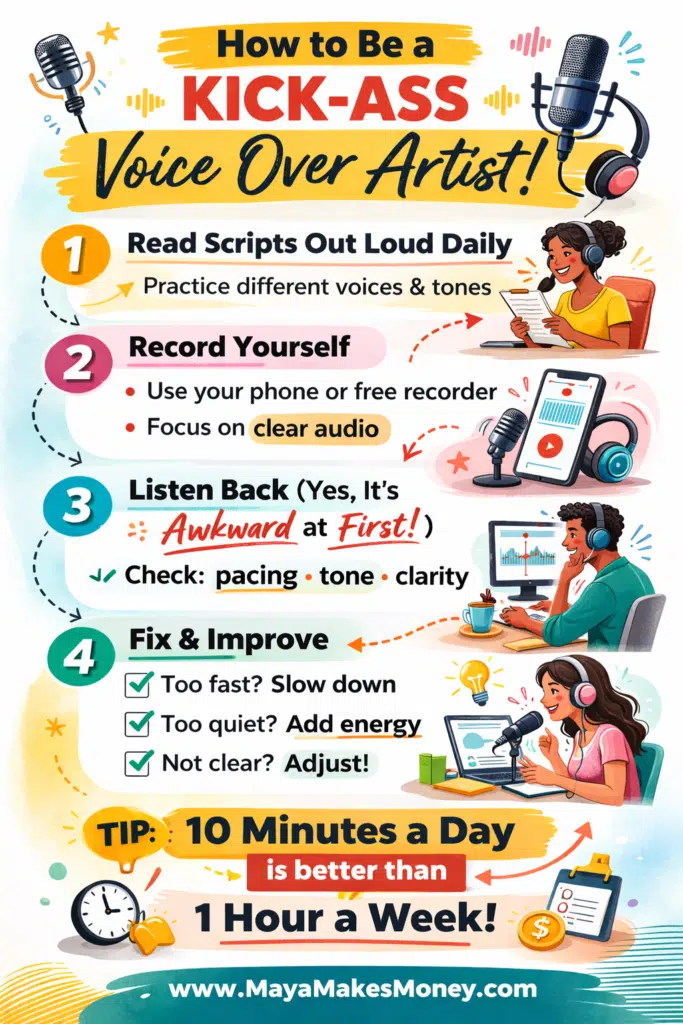
Voice over practice means:
- Reading scripts out loud daily
- Recording yourself
- Listening back (yes, it’s awkward at first)
- Fixing pacing, tone, and clarity
Ten focused minutes a day beats one frantic hour once a week.
Progress comes from boring consistency.
Your Voice Over Studio at Home (Keep It Simple)
You do not need a professional studio.
You need quiet.
DIY Voice Over Booth Options
Some realistic setups:
- A closet with clothes
- A small room with soft furnishings
- A corner with blankets or foam
A voice over booth doesn’t have to look cute. It just has to kill echo.
Your audience never sees it. They only hear it.
Voice Over Studio Home Mistakes to Avoid
Common beginner mistakes:
- Recording in a big empty room
- Sitting too far from the mic
- Using noisy fans or heaters
- Ignoring background noise
Clean audio matters more than fancy gear.
Recording and Editing Voice Over (Beginner-Friendly)
You don’t need to be a sound engineer.
You do need to:
- Record clean audio
- Trim mistakes
- Normalize volume
- Export properly
Free or low-cost editing software works just fine at the beginning. Learn the basics once and reuse them forever.
If you’re starting from zero, free audio recording software like Audacity is more than enough to get your voice over artist setup going. You can record, trim mistakes, and export clean files without paying a monthly fee.
How to Apply for Voice Over Jobs (Without Looking Like a Rookie)
Applying for voice over jobs is not about being flashy.
It’s about being professional.
You are not trying to impress someone with big words or dramatic energy.
You are trying to make their life easier.
That’s it.
Here’s exactly how a beginner voice over artist should apply.
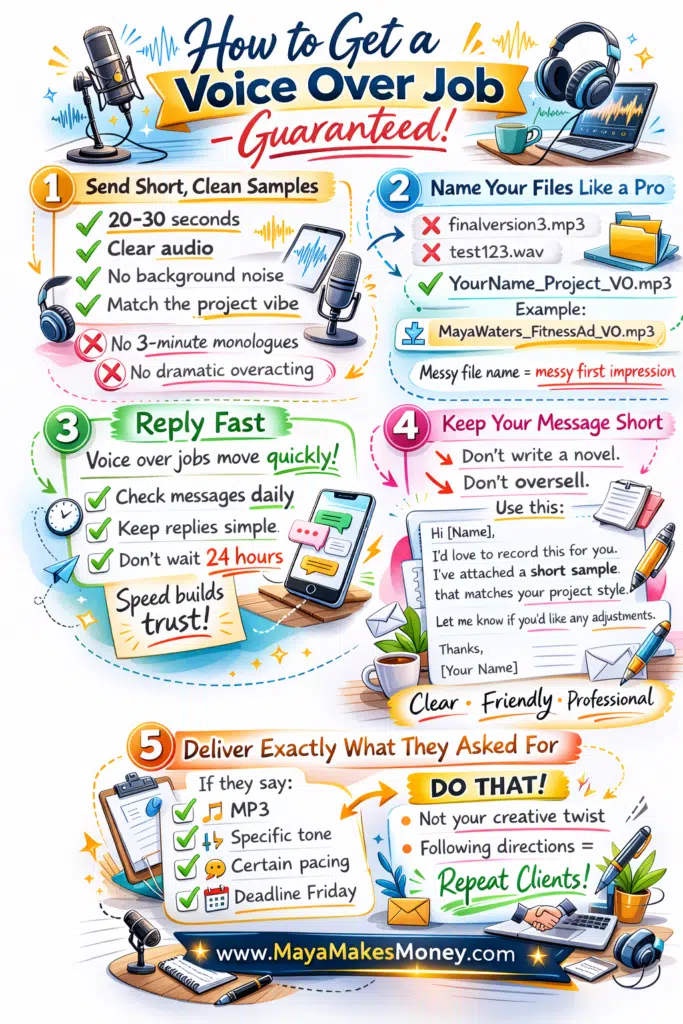
1. Send Short, Clean Samples (Not a 3-Minute Monologue)
You do not need a massive demo when you’re just starting.
What you need:
- 20–30 second samples
- Clear audio
- No background noise
- No dramatic overacting
If the job is for a calm explainer video, send a calm sample.
If it’s a friendly ad, send a friendly sample.
Match the vibe.
Clients don’t want to dig through long files.
They want to click, listen quickly, and decide.
Make it easy.
2. Name Your Files Like a Professional
This sounds small.
It’s not.
Do not send files called:
- finalversion3.mp3
- newread.wav
- test123.mp3
Instead, use:
YourName_ProjectName_VO.mp3
Example:
MayaWaters_FitnessAd_VO.mp3
Why?
Because producers download dozens of files at once.
If your file name looks messy, you look messy.
Professional file names make you look like a working voice over artist — even if you’re brand new.
3. Respond Fast (Speed Matters More Than You Think)
Voice over work moves quickly.
Sometimes clients hire the first good voice they hear.
If you wait 24 hours to reply, the job might already be gone.
You don’t need to be glued to your inbox.
But if you’re serious about voice over jobs from home, check messages daily.
Fast, simple replies build trust.
4. Keep Your Message Short and Normal
- Do not write a novel.
- Do not oversell yourself.
- Do not say “I have always had a passion for using my voice to inspire the world…”
Keep it simple:
Hi [Name],
I’d love to record this for you. I’ve attached a short sample that matches your project style.
Let me know if you’d like any adjustments.
Thanks!
[Your Name]
Clear. Friendly. Professional.
That’s it!
5. Deliver Exactly What They Asked For
If they say:
- MP3 file
- Specific pacing
- Certain tone
- Deadline by Friday
Do that.
Not your version.
Not your creative twist.
When you follow directions perfectly, you become valuable.
And valuable voice over artists get repeat work.
What Clients Actually Want
Here’s the secret most beginners miss:
Clients don’t want “talent.”
They want:
- Someone who sounds good
- Someone who delivers on time
- Someone who doesn’t create stress
That’s how repeat work happens.
And repeat work is where steady income lives.
Voice Over Artist Aesthetic (This Matters!)
This is not about being “pretty”.
This is about vibe baby!
When someone lands on your page or opens your email, they should immediately feel like,
“Okay. This person is legit.”
Your voice over artist aesthetic is the silent proof that you take yourself seriously.
And when you take yourself seriously? Clients will too.
What “Aesthetic” Really Means
We are not talking about influencer lighting or dramatic headshots.
We’re talking about clean. Clear. Professional.
That means:
- A simple website (nothing cluttered or confusing)
- Easy-to-find voice samples (no digging required)
- Clear contact info (make it stupid simple to hire you)
- Consistent branding (same name, same photo, same tone everywhere)
If someone has to hunt for your samples, they will leave.
If your website looks chaotic, they will assume your voice over work is too.
The Bottom Line
Becoming a voice over artist is not reserved for celebrities or people with “golden radio voices.”
It’s regular people with regular voices who build real income in this space.
The difference between the ones who make it and the ones who quit?
It’s not talent.
- It’s training.
- It’s practice.
- It’s patience.
The ones who win don’t chase shortcuts.
They build the skill. They show up. They improve a little every week.
That’s it.
You don’t need to be perfect.
You need to be consistent enough that clients start trusting you. And once that happens?
That’s when things shift.
Voice Over Artist FAQ
Is voice over a good side hustle?
Yes, if you treat it like a skill-based business. It’s not instant money, but it can become steady income over time.
Do I need a special voice to be a voice over artist?
Nope! Natural, clear, and relatable voices book work every day.
Can I do voice over jobs from home?
Absolutely. Most voice over jobs today are recorded from home studios.
How long does it take to get your first paid job?
Some people book within weeks. Others take months. Consistent practice speeds things up.
Do I need expensive equipment to start?
No. A basic mic, quiet space, and clean audio matter more than price.
