


This post shares budgeting tips for beginners who want their money to behave for once.
So let me tell you about the moment I realized I needed a budget.
It was a Tuesday.
I had just come back from the grocery store with two bags of food, a suspiciously expensive carton of blueberries, and a receipt long enough to qualify as a short novel.
Total: $76.
What did I buy??
Honestly… ummm…. I’m still not entirely sure.
No full meals.
No plan.
✅ Just vibes and impulse snacks.
And when I checked my bank account later that night?
Let’s just say my balance looked like it had been through a breakup.
That was the moment I realized something kinda important.
I didn’t need a complicated budget.
I just needed better habits!
If you’re here to try and find some budgeting tips for beginners, good news darlin’…. ya don’t need spreadsheets, a bunch of financial jargon, or even a personality transplant for that matter.
You just need a simple system to quietly keep your money from disappearing.
So, grab a coffee (or your emotional support water bottle), and let’s talk about budgeting the way it should be – EASY.
First, Let’s Clear Something Up
Budgeting has terrible marketing.
People think it means:
• never eating out
• never buying anything fun
• living on beans and regret
• whispering “maybe next month” every time you want something
Thanks, but NO thanks!
A good budget doesn’t punish you.
A good budget just helps your money behave. 😊
Think of a budget like a map for your money. You can still go anywhere—you just won’t get lost.
TL; DR: Budgeting Tips for Beginners
If money keeps disappearing before the end of the month, you’re not alone. The good news? Budgeting doesn’t have to mean giving up everything fun. These simple budgeting tips for beginners help you track spending, stop money leaks, and build better habits so your paycheck lasts longer.
Quick takeaways:
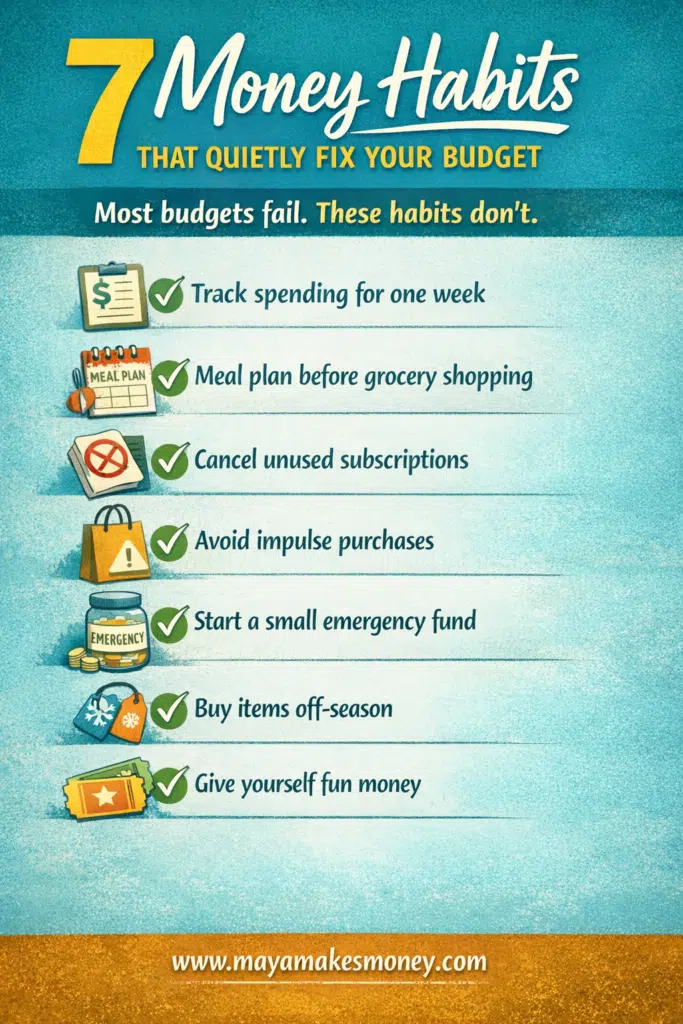
✔ Track where every dollar goes
✔ Build a simple budget (not a complicated one)
✔ Use the envelope method to control spending
✔ Plan meals before grocery shopping
✔ Buy items in the off-season
✔ Start a small emergency fund
✔ Pay down debt using the snowball method
✔ Always include fun money in your budget
⬆️ PIN THIS! ⬆️
What Are the Best Budgeting Tips for Beginners?
The best budgeting tips for beginners are simple habits like tracking your spending, creating a basic budget, planning meals, avoiding impulse purchases, and saving small amounts regularly.
These strategies help you control where your money goes without making your lifestyle feel restrictive.
- Track every dollar you spend
- Use a simple budgeting system
- Plan grocery shopping in advance
- Avoid impulse purchases
- Save a small emergency fund
- Pay down debt strategically
- Leave room in your budget for fun
10 Budgeting Tips for Beginners That Actually Work
1. Start by Tracking Your Spending (Yes, Every Dollar)
This is one of the most important budgeting tips for beginners, and it’s also the one people skip.
Why?
Because we all think we know where our money goes.
We do not.
Your brain remembers the big things.
✅Rent.
✅Gas.
✅Phone bill.
But the little leaks?
The Amazon purchases.
The drive-through coffees.
The random “quick stops” at the grocery store.
Those add up fast.
For one week, write down every dollar you spend.
✅No shame.
✅No guilt.
Just curiosity.
Because you can’t fix money leaks you can’t see.
If you want a deeper step-by-step walkthrough, I break down the process in my guide on how to budget and save money when life throws you curveballs.
2. Build a Simple Budget (Not a Fancy One)
Here’s a beginner mistake I see all the time.
People try to build the perfect budget….
✅Color-coded spreadsheets.
✅Seventeen categories.
✅Formulas that would impress a NASA engineer.
Two weeks later?
They abandon it.
Your first budget should be boring.
Just divide your income into a few categories:
✅Housing
✅Food
✅Transportation
✅Bills
✅Savings
✅Fun money
That’s enough to start.
Remember: a simple budget you follow beats a perfect budget you quit.
3. Try the Envelope Method
This is one of the oldest budgeting systems in the book.
And honestly? It still works like magic.
The envelope budgeting method is even recommended by financial experts because it helps you physically see where your money is going instead of guessing.
Here’s how it goes……
At the beginning of the month (or pay period), you divide your spending money into envelopes.
✅Groceries
✅Gas
✅Entertainment
✅Eating out
When the envelope is empty?
That category is done.
✅No borrowing from other envelopes.
✅No pretending your credit card is helping.
It works because cash feels real.
Swiping a card feels like Monopoly money!
Watching actual bills disappear from an envelope?
Your brain suddenly becomes very responsible.
So if you’re trying to save money without stressing yourself out and you’re open to this method, I put together a $100 envelope savings challenge that makes saving feel way less painful (and way more doable).
4. Meal Planning Will Save You a Ridiculous Amount of Money
Let’s talk about groceries for a second.
Because grocery stores are sneaky.
You walk in for milk and eggs.
You walk out with:
✅frozen appetizers
✅a $9 sauce you’ve never heard of
✅three snacks you didn’t plan for
✅and somehow… still no dinner plan
Meal planning fixes this.
Before you shop:
✅Look in your fridge.
✅Look in your pantry.
✅Plan meals for the week.
✅Make a list.
Then stick to that list like it owes you money.
Suddenly groceries become predictable instead of chaotic.
5. Grocery Stores Are Designed to Trick You
This one surprised me when I first learned it.
Milk and bread are usually all the way at the back of the store.
Why?
Because the store wants you to walk past a bunch of other stuff first.
Candy near the checkout?
✅That’s there to make you grab one more thing.
Rows of snacks?
✅They’re meant to make you hungry and spend more.
That’s why using a grocery list is one of the very BEST budgeting tips for beginners.
It’s not that you have no self-control.
Grocery stores are just really good at getting people to buy extra things.
6. Buy Things in the Off-Season
Your great-grandparents knew this trick.
The best time to buy something is usually not when you need it.
Winter coats?
✅ Buy them in February or March.
Patio furniture?
✅ September clearance.
Holiday decorations?
✅ January sales.
Buying seasonally is one of those quiet budgeting tips for beginners that saves serious money over time.
It’s basically letting patience do the work for you.
One of the easiest ways I have learned to cut spending without sacrificing my lifestyle is simple this: shopping smarter. That’s exactly why I created this guide to the best affordable clothing sites for bougie outfits on a budget. 😉
7. Start a Tiny Emergency Fund
Emergency funds sound scary.
People think they need thousands saved before they can even begin.
Nope.
Start small.
Five dollars a week.
Ten when you can.
Even a tiny emergency fund can keep life from spiraling when something unexpected happens.
According to experts, even a small emergency fund can make a huge difference in handling unexpected expenses without going into debt.
Because is it just me, or do emergencies not have the absolute worst timing!?
✅Car repairs.
✅Vet bills.
✅Broken appliances.
A small buffer turns panic into inconvenience.
And that matters more than you think.
⬆️ PIN THIS! ⬆️
8. Use the Snowball Method for Debt
Debt feels overwhelming because the total number is huge.
The snowball method fixes that.
List your debts from smallest to largest.
Then:
✅Pay the minimum on everything.
✅Attack the smallest debt first.
✅Once it’s, roll that payment into the next one.
Every win builds momentum.
And momentum is what will keep you going.
Which is exactly what you want.
If you want to see exactly how this strategy works in real life, I also share a full breakdown of how to pay off $30,000 in debt step-by-step.
9. Budget for Fun
This might sound weird in a budgeting article but hear me out.
If your budget has zero fun money, it will fail.
Every time.
Humans need joy.
✅Coffee with friends.
✅Takeout on a Friday.
✅Movie night.
A good budget includes room for real life.
Even if it’s small.
Because the goal of budgeting is not to eliminate happiness.
It’s to make sure you can afford it.
10. Let Your Budget Become a Habit
Here’s the secret nobody talks about.
The best budgets are the ones you barely notice.
They become routine.
✅You check your spending.
✅You plan your meals.
✅You set money aside.
✅Rinse and repeat.
Week after week.
Sure, it’s not exactly glamorous….
But it works.
Just like brushing your teeth isn’t exciting either… but it keeps them from going to shit.
The Bottom Line
If you’re looking for budgeting tips for beginners, remember this:
You don’t need a perfect system.
You need a simple rhythm.
✅Track your spending.
✅Plan your meals.
✅Save a little when you can.
✅Think ahead when you shop.
Those small habits quietly turn chaos into control.
And once that rhythm settles in?
Budgeting stops feeling like punishment.
It just becomes part of how you live.
Budgeting Tips for Beginners Quick FAQs
What are the best budgeting tips for beginners?
Start by tracking spending, building a simple budget, meal planning, and creating a small emergency fund.
What is the easiest budgeting method?
The envelope method is one of the easiest budgeting systems because it creates clear spending limits.
How much should beginners save?
Even saving $5–$20 per week is a great start toward building an emergency fund.
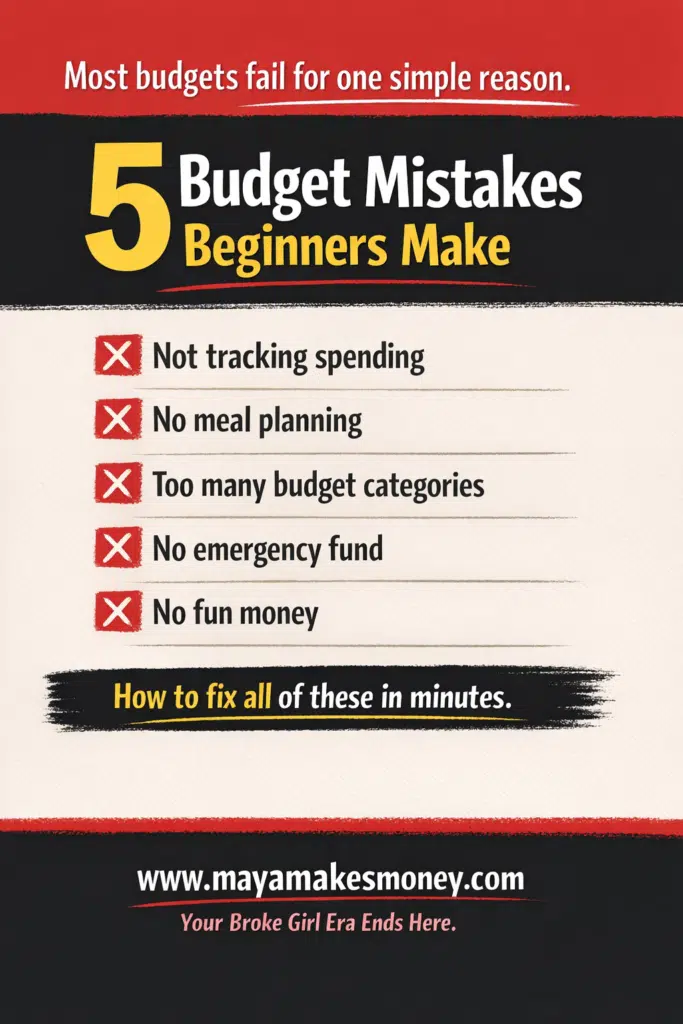
Why do budgets usually fail?
Most budgets fail because they are too strict and unrealistic.
