




If searching for a coffee shop business plan has made your dream feel overwhelming instead of exciting, this is your sign to pause. This guide was written to help things finally click.
This Coffee Shop Business Plan Is for Beginners Who Want It Simple
This coffee shop business plan is designed for first-time owners who want a realistic, manageable way to open a coffee shop without overbuilding, overspending, or burning out in the first year.
It focuses on:
- simple operations
- smaller spaces
- predictable costs
- sustainable growth
No franchises. No investors. Just a smart plan that works.
Opening a coffee shop sounds dreamy. Cute cups. Cozy vibes. Where everybody knows your name. Very 80s–90s sitcom energy — think Cheers, but caffeine-fueled without the bar tab.
And yes, that could be your real life. But behind the scenes? There’s rent, equipment, staffing, permits, and about a million decisions that can make or break you way faster than people realize.
Don’t worry — this guide won’t overwhelm you. This coffee shop business plan is made for beginners, not franchises, not investors, and definitely not people with unlimited money. It’s for real humans who want to open a coffee shop without accidentally setting their savings on fire. 🔥
⬆️PIN THIS! ⬆️
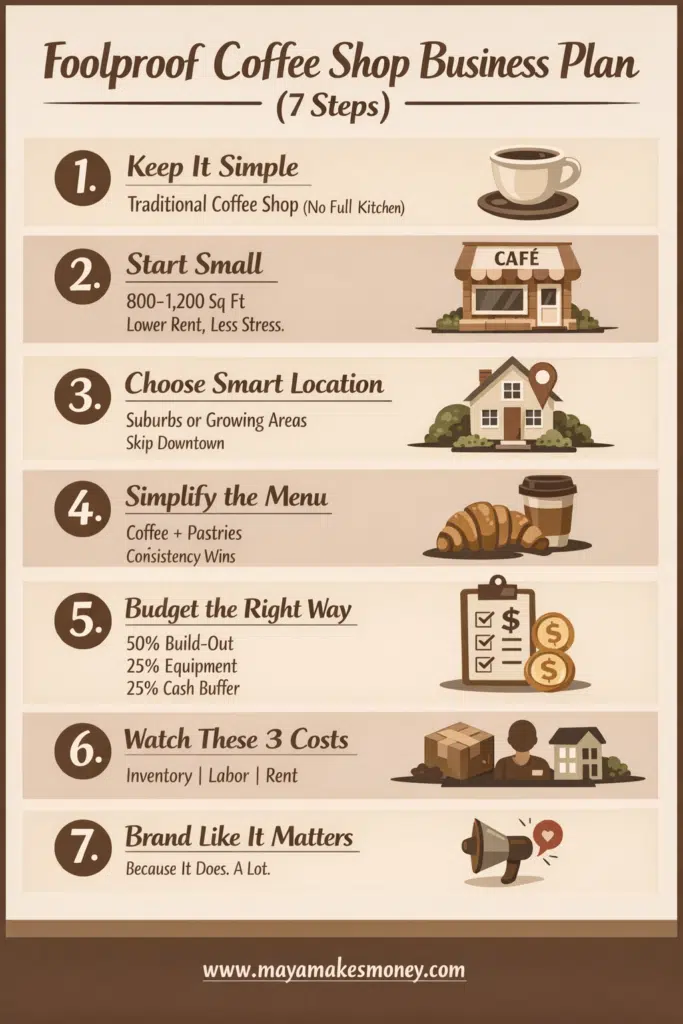
TL;DR – The Coffee Shop Business Plan
- Start with a simple, traditional coffee shop (no full kitchen)
- Aim for 800–1,200 sq ft to keep costs and stress down
- Choose suburban or growing neighborhoods, not downtown
- Keep your menu small and consistent
- Budget smart: 50% build-out, 25% equipment, 25% working capital
- Track the big 3 costs: inventory, labor, rent
- Branding matters more than most beginners realize
If that already made you breathe easier, excellent! Then let’s keep going.
On the other hand, if “working capital” sounds vague or confusing, Investopedia breaks it down in plain English — it’s basically the money that keeps your business running when sales are slow or unexpected costs pop up.
Coffee Shop Business Plan Checklist (Printable)
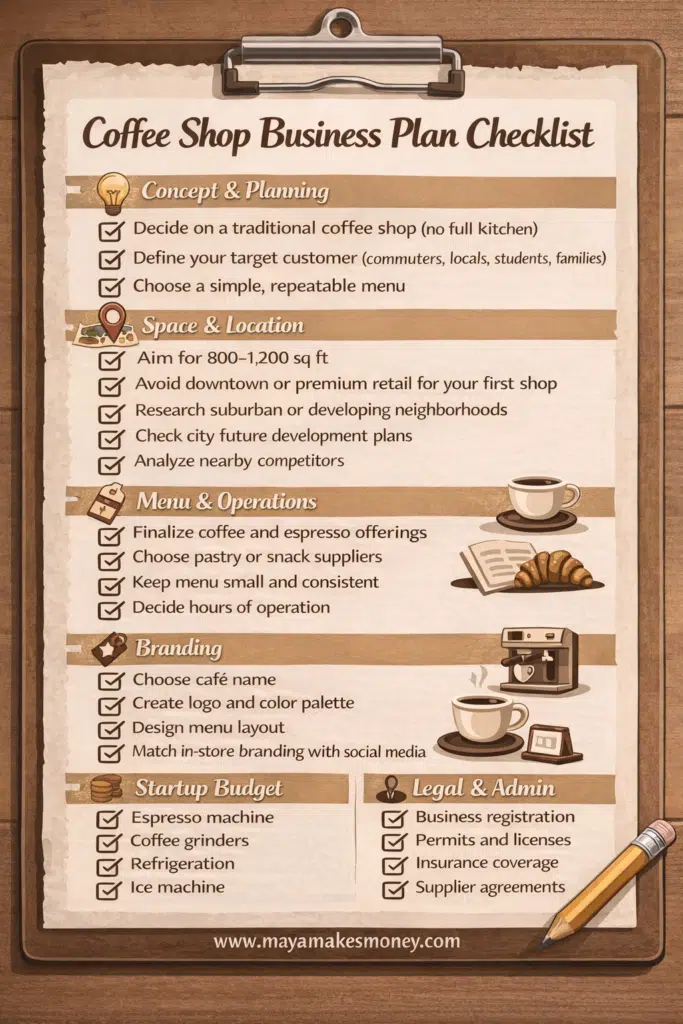
Before you spend money or sign a lease, walk through this coffee shop business plan checklist. It keeps you focused on the decisions that actually matter early on.
Coffee Shop Business Plan Checklist
Concept & Planning
☐ Decide on a traditional coffee shop (no full kitchen)
☐ Define your target customer (commuters, locals, students, families)
☐ Choose a simple, repeatable menu
Space & Location
☐ Aim for 800–1,200 sq ft
☐ Avoid downtown or premium retail for your first shop
☐ Research suburban or developing neighborhoods
☐ Check city future development plans
☐ Analyze nearby competitors
Menu & Operations
☐ Finalize coffee and espresso offerings
☐ Choose pastry or snack suppliers
☐ Keep menu small and consistent
☐ Decide hours of operation
Branding
☐ Choose café name
☐ Create logo and color palette
☐ Design menu layout
☐ Match in-store branding with social media
Startup Budget
☐ Allocate 50% for build-out and setup
☐ Allocate 25% for equipment
☐ Allocate 25% for working capital
☐ Budget at least 3 months of operating expenses
Equipment
☐ Espresso machine
☐ Coffee grinders
☐ Refrigeration
☐ Ice machine
☐ POS system
Staffing
☐ Plan staffing schedule
☐ Decide if you’ll manage initially
☐ Budget wages realistically
Legal & Admin
☐ Business registration
☐ Permits and licenses
☐ Insurance coverage
☐ Supplier agreements
If you can check off most of this list, your coffee shop business plan is on solid ground.
⬆️PIN THIS! ⬆️
What This Coffee Shop Business Plan Is (And isn’t)
This is not a 40-page formal document written for a bank loan.
This coffee shop business plan is:
- Practical
- Beginner-friendly
- Focused on decisions that actually matter early on
Think of it as your blueprint, not a homework assignment.
Step 1: Choose the Right Type of Coffee Shop
There are many types of cafés, but not all are beginner-friendly.
For your first shop, the smartest choice is a traditional coffee shop:
- Coffee and espresso drinks
- Pastries and light snacks
- No full kitchen
Why this works for beginners:
- Lower startup costs
- Fewer staff needed
- Less licensing and equipment
- Easier day-to-day operations
You don’t need breakfast, lunch, dinner, smoothies, cocktails, and seasonal chaos on day one. Simple wins.
Step 2: The Ideal Size for a Beginner Coffee Shop
One of the biggest mistakes new owners make is going too big.
👉 800–1,200 square feet is the sweet spot!
This size allows you to:
- Run with 1–2 staff most of the day
- Keep rent reasonable
- Create a cozy, intentional atmosphere
- Avoid overwhelming operations
Bigger space = more cleaning, more staff, more furniture, more stress. You can always expand later.
Step 3: Location Strategy That Makes Sense (Not Sexy, but Smart)
Location can absolutely make or break your coffee shop business plan.
Best locations for beginners:
- Suburban areas
- Residential neighborhoods
- Up-and-coming developments
What to avoid early on:
- Downtown cores
- Prime retail strips
- Malls dominated by chains
Why?
Because downtown rent is brutal, competition is intense, and landlords often prefer big brands.
Check your city’s future development map. New housing, schools, or commercial zones mean future foot traffic before prices spike.
⚠️ Also: don’t rent a space just because it used to be a coffee shop. If it was thriving, it probably wouldn’t be available.
Step 4: Coffee Shop Concept (Skip the Kitchen)
If this is your first business, I’m going to say this clearly:
Do not build a kitchen.
Instead, structure your menu around:
- Coffee + espresso
- Tea and cold drinks
- Pastries from a local bakery
- Simple grab-and-go items
Why this matters:
- No chef needed
- Fewer permits
- Less staffing complexity
- Faster service
- Lower upfront cost
Consistency beats complexity every time when you’re new.
Step 5: Interior Design on a Budget
Your coffee shop doesn’t need to look expensive. It needs to look intentional.
Beginner-friendly design ideas:
- Neutral paint (huge impact, low cost)
- Warm lighting
- Plants or local art
- Second-hand or vintage furniture
Popular beginner concepts:
- Minimalist café
- Book café
- Botanical / greenery-focused space
A small, well-designed shop often feels more premium than a large, messy one.
Step 6: Branding (This Is Not Optional)
Branding isn’t just your logo.
It’s:
- Your colors
- Your menu design
- Your signage
- Your social media vibe
Strong branding:
- Makes marketing easier
- Builds trust faster
- Helps customers remember you
- Allows organic growth online
If you get branding right early, you save money later.
Step 7: Coffee Shop Startup Costs (Simple Budget Breakdown)
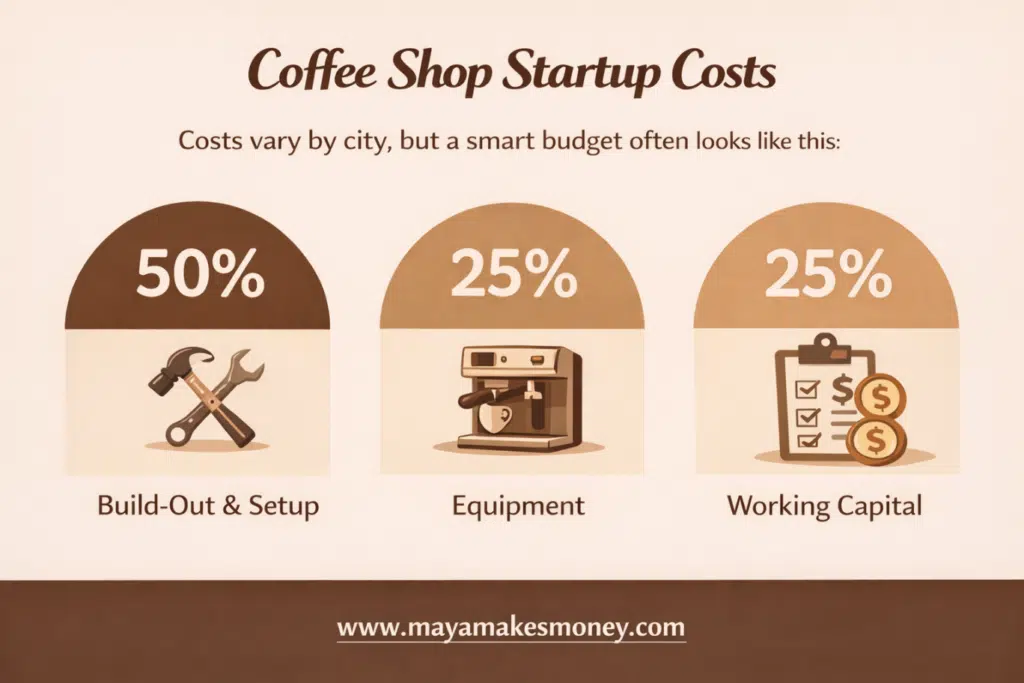
Costs vary by city, but this structure works almost everywhere.
Budget Rule of Thumb:
- 50% initial build-out & setup
- 25% equipment
- 25% working capital
Initial Costs Include:
- Renovations
- Electrical & plumbing
- Permits and licenses
- Insurance
Equipment:
- Espresso machine
- Grinders
- Refrigeration
- Ice machine
Leasing equipment can reduce maintenance headaches early on.
Working Capital:
- Staff wages
- Utilities
- Inventory
- Security deposits
Plan for at least 3 months of operating expenses.
According to the U.S. Small Business Administration, one of the smartest things you can do when starting a small business is actually knowing your startup costs ahead of time and setting aside enough working capital so you’re not scrambling in those first few months.
Step 8: Ongoing Costs That Affect Profitability
Your coffee shop business plan lives or dies by these three numbers:
Cost of Goods (~35%)
- Coffee beans
- Milk
- Pastries
- Cups and supplies
Labor (~40%)
- Baristas
- Manager
- Payroll taxes
Cheap labor usually costs more long-term. Experience matters.
Rent (~15%)
- Must align with realistic revenue potential
These are benchmarks, not rigid rules. Adjust as your business grows.
The Bottom Line
A coffee shop business plan doesn’t need to be complicated to be effective.
Start small.
Stay simple.
Know your numbers.
Build loyalty before expansion.
That’s how coffee shops survive… and then thrive ☕
Coffee Shop Business Plan FAQ
What is a coffee shop business plan?
A coffee shop business plan outlines how your coffee shop will operate, including concept, location, menu, startup costs, staffing, and monthly expenses. It’s your roadmap before spending real money.
How much money do I need to start a coffee shop?
Costs vary widely by location, but even a small coffee shop often requires six figures. You can lower costs by choosing a smaller space, skipping a kitchen, leasing equipment, and keeping renovations simple.
What is the best size for a beginner coffee shop?
Most beginners do best with 800–1,200 square feet. It’s easier to manage, requires fewer staff, and keeps rent and build-out costs under control.
Is downtown a good place to open a coffee shop?
Not usually for beginners. Downtown rent is higher, competition is intense, and landlords often prefer established chains. Suburban or developing areas are often a smarter first move.
Do I need a kitchen in my coffee shop?
No. Many successful beginner coffee shops operate without a kitchen by offering pastries and simple snacks from suppliers or bakeries.
What are the biggest ongoing expenses for a coffee shop?
The three largest expenses are typically inventory (cost of goods), labor, and rent. Managing these well is key to profitability.
How do I choose a good coffee shop location?
Look for steady foot traffic, easy access, reasonable rent, and limited direct competition. Checking future development plans can also reveal high-growth areas.
